There is a distinct kind of satisfaction that comes from building your own furniture. You scroll through Facebook, YouTube, or TikTok, see someone turn a few raw planks into a beautiful coffee table, and immediately think, “Kaya ko rin ‘yan.”
But the moment you walk into a local hardware store or start scrolling through Lazada and Shopee, that excitement usually hits a wall of confusion. You are suddenly stared down by rows of heavy, high-voltage power tools, flashing LED displays, and massive “12-in-1 combo sets” that cost a fortune.
For beginners, it is incredibly easy to fall into the trap of spending thousands of pesos on loud, expensive machinery that ultimately sits gathering dust next to the washing machine.
Before you spend your hard-earned money, let’s talk about how to build a smart, highly practical starter kit that actually fits your budget, your skill level, and the physical space of a typical Pinoy home.
Start Quiet: Why Hand Tools are Your Secret Weapon
If you are working on a balcony, a small garage port, or a tight backyard, your neighbors are going to be your biggest constraint. Screaming power tools at 8:00 AM on a Sunday is a quick way to get a barangay complaint. This is where manually operated hand tools become your best friend.
Hand tools don’t need outlets, batteries, or tangled extension cords trailing across the floor. They are lightweight, compact enough to slide into a single drawer, and practically indestructible because they have zero electronic parts to fail.
More importantly, working by hand teaches you how wood actually behaves. When you use a Japanese pull saw (called a Ryoba) to slice through a piece of Palochina, or use a hand plane to shave down a sticking bedroom door, you can feel the grain of the wood. You learn when to push, when to pull, and how the fibers react.

This manual process builds a foundation of design confidence and muscle memory that heavy, high-RPM power tools simply cannot teach you, and you get all of this without the terrifying noise and fast-moving hazards of a spinning motor.
When to Bring in the Motors
As your projects get bigger, you will quickly find the physical limits of manual labor. Trying to hand-sand a large dining tabletop or manually rip-cut through a thick, heavy plank of kiln-dried Tanguile can easily exhaust your energy long before you are even ready for assembly.
This is the exact moment where strategically introducing power tools makes complete sense.
A quality cordless drill, for example, is a non-negotiable upgrade. It can sink a dozen screws or drill pilot holes in seconds, which is a task that would take considerable sweat and joint pain with a manual hand brace.
The goal isn’t to reject technology, but to use it wisely. If you are mostly doing minor home repairs, assembling flat-pack furniture, or making small wooden crafts, a solid set of hand tools is all you will ever need. But if you plan to build heavy outdoor planter boxes, bookshelves, or kitchen cabinets, investing in a few select power tools will give you a massive return on your investment by saving you hours of physical strain.
The Balanced “Hybrid” Starter Kit
To skip the guesswork on your next hardware run, we recommend building a balanced hybrid kit that combines the quiet precision of manual tools with the speed of basic power tools.
For your manual essentials, start with a Japanese pull saw, or a Ryoba, which cuts on the pull stroke to give you incredibly clean cuts with less physical effort. You should also grab at least two quick-adjust bar clamps, which act as your extra set of hands to keep your wood perfectly aligned and tight during glue-ups. Next, get a combination square, which is a simple metal ruler with a sliding base that ensures perfect 90 degree and 45 degree angles every single time. Finally, round out your hand tools with a basic chisel set containing 1/4″, 1/2″, and 1″ chisels for cleaning up tight corners, carving out hinge slots, and scraping away dried wood glue.

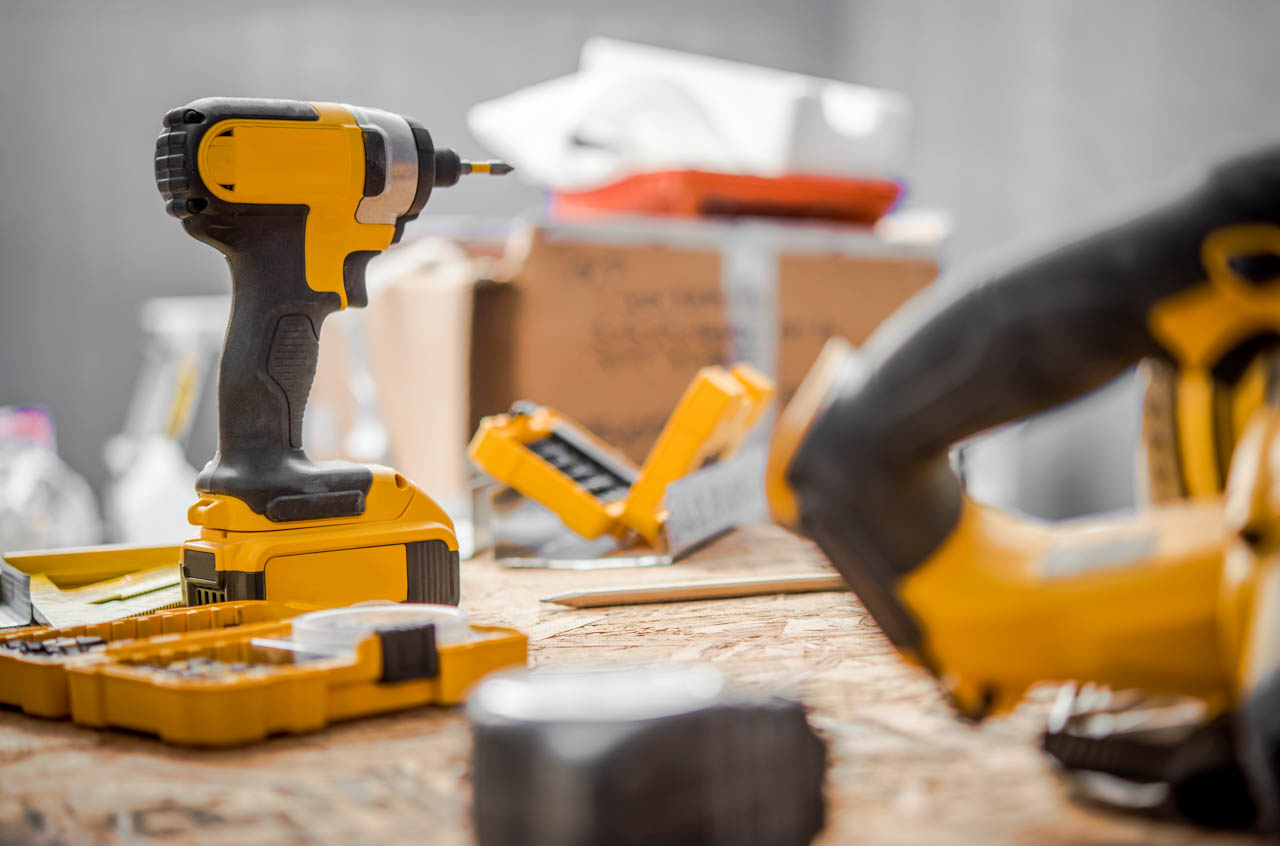
When you are ready for power upgrades, your absolute workhorse should be a 12V or 18V cordless drill and driver for drilling pilot holes and driving screws without stripping your wood. To save your forearms from hours of exhausting, dusty prep work, a random orbital sander is a lifesaver before painting or varnishing. For cutting, a jigsaw is the safest, most versatile power tool for making both straight cuts and curved shapes in plywood and thin lumber. Down the road, when you are ready to tackle fancy edge profiles, you can optionally add a cordless trim router to your collection.
Safety is Your Hardest Boundary
In woodworking, safety is your responsibility. While hand tools can occasionally give you a minor splinter or a shallow cut if a chisel slips, power tools operate with immense force and high-speed spinning blades that do not give second chances.
Operating a circular saw or a nail gun requires full concentration, proper safety glasses, a dust mask, and a clear understanding of the tool’s instruction manual. A split-second distraction with a high-RPM blade can lead to a permanent, life-altering injury.
For an absolute beginner, starting with manual tools lets you master the basics of project layout, wood handling, and workshop safety at a slow, completely controlled pace before you introduce the risks of heavy machinery.
The Verdict: Build as You Go
At the end of the day, you do not need a showroom-quality workshop to start building. The smartest way to expand your toolkit is to buy only what you need for your current project.
Start with a highly affordable kit of essential hand tools to master the patience and precision of the craft. As your skills grow and your projects get larger, you can confidently invest in specific power tools to take over the most exhausting, repetitive tasks.
By balancing your toolkit this way, you keep your setup costs low, keep your workspace manageable, and create a workshop that grows naturally with your passion.