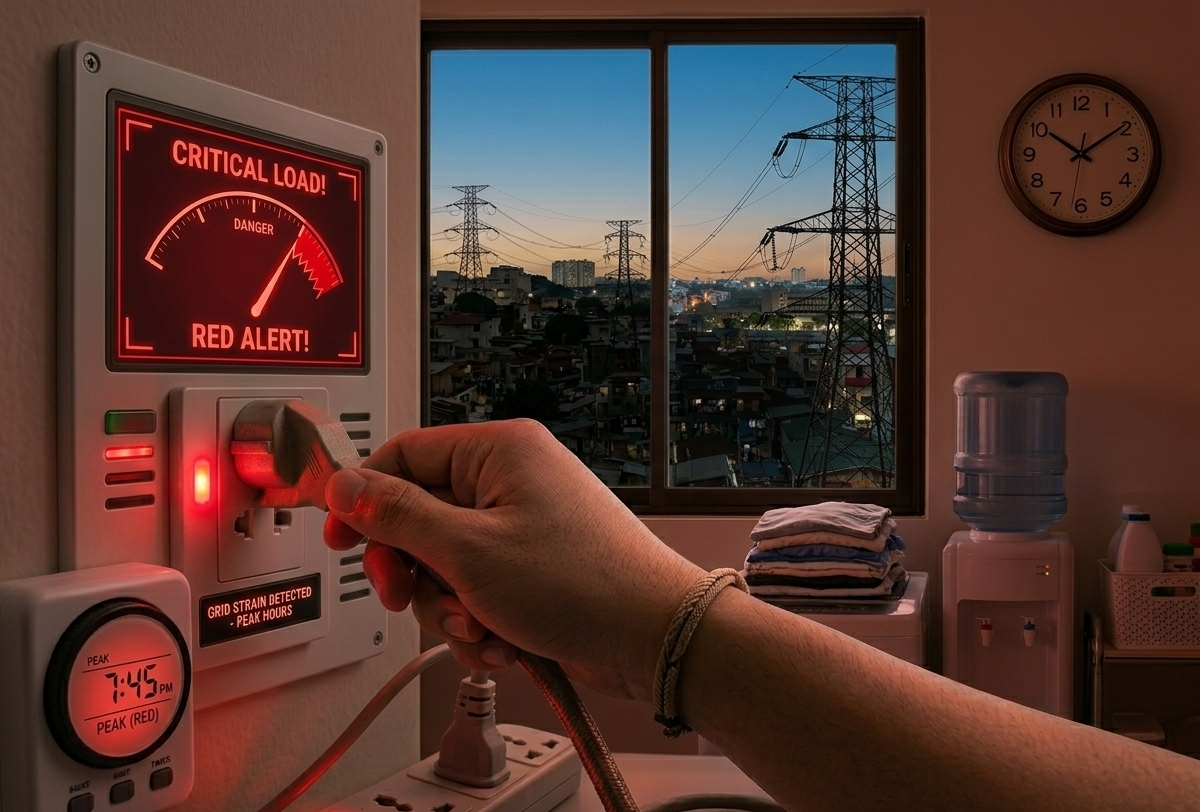
The Philippine energy infrastructure is currently facing a formidable test as the National Grid Corporation of the Philippines (NGCP) frequently places major power grids under critical alert statuses. These color-coded advisories serve as essential tools for managing the delicate balance between supply and demand, particularly during the grueling summer months when electricity consumption spikes as citizens attempt to stay cool.
To understand the gravity of the situation, one must look at the three primary tiers of the grid’s health: a White Alert indicates normal operations with sufficient reserves; a Yellow Alert signals “tight operating reserves,” where the margin of backup power is thin but supply still meets demand; and a Red Alert, the most critical stage, is declared when the total available supply and reserves are insufficient to meet peak requirements. This highest alert level often necessitates Manual Load Dropping (MLD), or rotating brownouts, as a controlled measure to shed load and prevent a catastrophic total system collapse.
The impact of these grid instabilities has been felt acutely by the public, with recent Red Alerts in the Luzon grid affecting between 1.9 million and 2 million Meralco customers. These service interruptions, spanning portions of Metro Manila, Bulacan, Cavite, Laguna, Quezon, and Rizal, have lasted an average of three hours per session as part of emergency efforts to stabilize the system.
The crisis is driven by a widening gap between available capacity and surging demand; for instance, the Luzon grid recently saw available capacity at 12,479 megawatts (MW) trailing behind a peak demand of 12,595 MW. The situation in the Visayas is equally strained, with a capacity of 2,413 MW struggling to keep up with a 2,541 MW demand. According to the Department of Energy (DOE), this precarious state is the result of a “perfect storm” of forced power plant outages, derated facilities, and high seasonal demand fueled by extreme temperatures.
In response to these challenges, a coordinated effort between the government and the private sector is underway to mitigate the fallout. The DOE has directed power generation companies to expedite the resolution of technical issues and restore units to full capacity.
Critical natural gas facilities, including the Sta. Rita, Ilijan, and San Gabriel plants, are being utilized at high rates to provide a necessary buffer. Simultaneously, Meralco is actively deploying its Interruptible Load Program (ILP), which has secured more than 240 MW of de-loading capacity by having large commercial and industrial players voluntarily run their own generator sets.
Everyday consumers also hold significant power to help shorten the duration of these alerts by adopting stricter energy efficiency protocols. By setting air conditioners to a recommended 24–25 degrees Celsius, unplugging non-essential devices, and shifting heavy-load chores like laundry to outside the peak hours of 4 p.m. to 10 p.m., the public can play a vital role in protecting the grid’s integrity and ensuring electricity remains available for hospitals and other critical services.