


Features
Philippine Building Permit Guide: Requirements, Estimated Fees, and Process

Advertisement
- Section
- Features
- Published
- Reading time
- 4 min
Starting a construction project in the Philippines is an exciting milestone, but getting stuck in permit paperwork can quickly turn that excitement into a headache. Whether you are building your dream home, opening a new commercial space, or expanding an existing property, understanding how the Office of the Building Official (OBO) works is the secret to keeping your project on schedule and within budget.
Before any shovel hits the dirt, secure your Building Permit from the local government unit where the property is located. Under the National Building Code of the Philippines, this permit ensures your structure meets safety, structural, and environmental standards. Along with the main building permit, expect to file for ancillary permits depending on your scope, including architectural, structural, sanitary or plumbing, electrical, and mechanical permits. You will also need to secure preliminary clearances such as a Zoning Clearance from the City Planning Office and a Fire Safety Evaluation Clearance from the Bureau of Fire Protection.
Essential Building Permit Requirements
To keep your application moving smoothly, prepare a complete set of core requirements from day one:
Advertisement
1. Proof of Property Ownership & Authority
You need to establish clear legal ownership or authority over the construction site. This starts with a Certified True Copy of the Transfer Certificate of Title (TCT) issued within the last three to six months, along with a current Tax Declaration and Real Property Tax Clearance proving all land taxes are paid. If the land is not registered under your name, you must provide a notarized Deed of Absolute Sale, a Contract of Lease, or a Special Power of Attorney (SPA) explicitly authorizing you to construct on the property.
2. Signed & Sealed Technical Plans
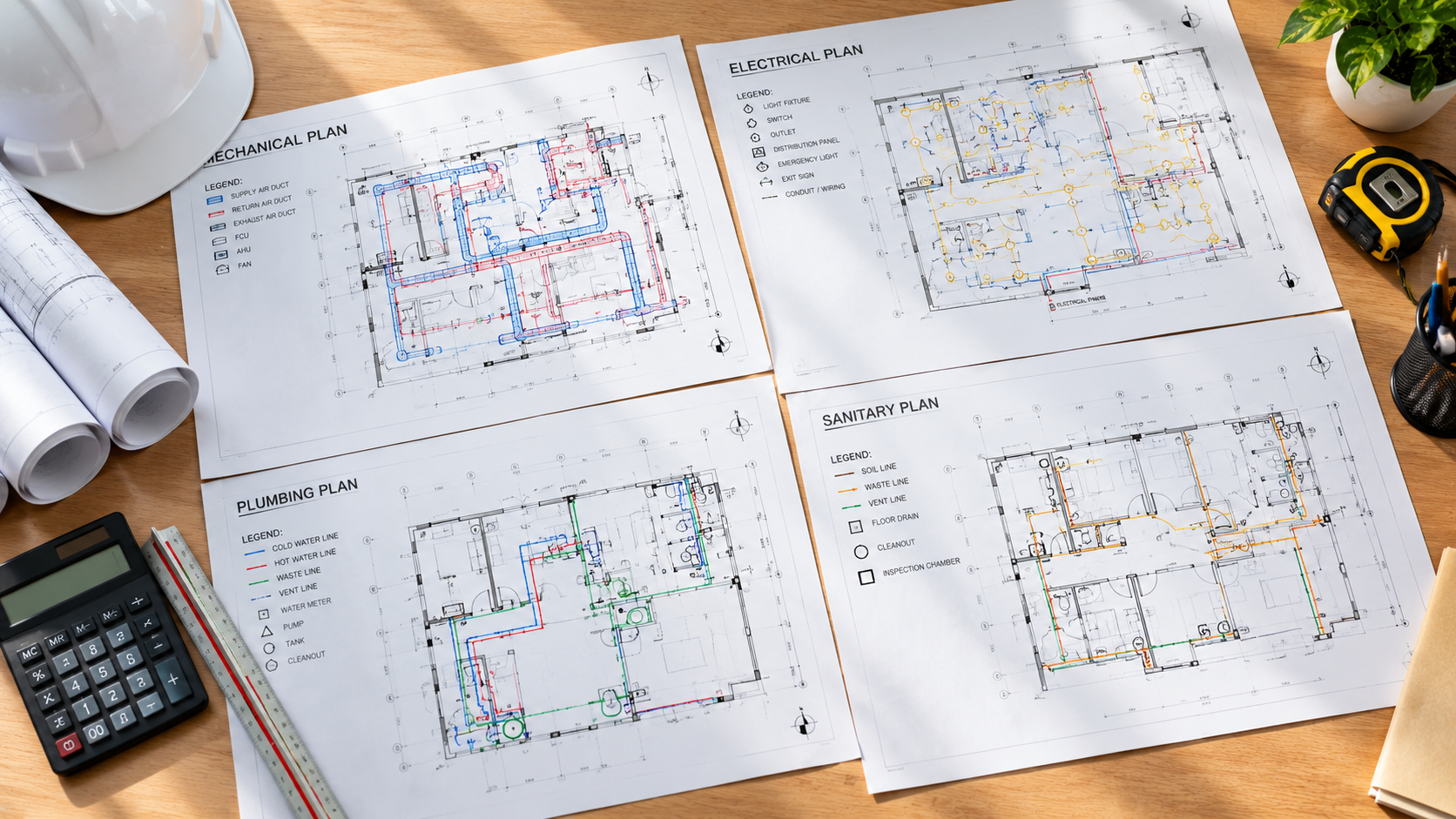
You will need to submit complete technical blueprints, typically five full sets, designed, signed, and sealed by licensed professionals. These cover architectural and structural layouts signed by a registered Architect and Civil Engineer, as well as specialized electrical, plumbing, sanitary, and mechanical plans signed by their respective professional engineers and master plumbers. Accompanying these plans are technical specifications, structural analysis calculations, and a notarized Bill of Materials or cost estimate, alongside photocopies of valid PRC IDs and current Professional Tax Receipts (PTR) for every professional involved.
Advertisement
3. Application Forms & Local Clearances
Finally, you must gather all required government administrative forms and preliminary agency approvals. This includes duly accomplished and signed unified building permit and ancillary application forms, a Locational or Zoning Clearance from the City Planning Office, and a Barangay Construction Clearance from the local barangay hall. If your site sits within a private subdivision or condominium, you will also need a written HOA clearance. Once these are combined with your plans, you must submit them to the Bureau of Fire Protection to secure your Fire Safety Evaluation Clearance (FSEC).
When it comes to costs, building permit fees are not a flat rate. They are calculated based on your total floor area, estimated cost of construction, building classification, and local government assessment schedules. On average, official permit fees for a standard residential home range from a few thousand pesos to around ₱15,000 to ₱30,000+, while larger commercial developments scale higher. Beyond the official LGU line items, budget for professional fees for design and sealing, notary fees for legal documents, processing fees, and mandatory clearances.
Advertisement
Project delays usually happen because of simple, avoidable mistakes. The single biggest reason applications get stuck in review is submitting incomplete or unsealed blueprints, so double-check every page with your design team before submitting. Zoning mismatches are another common roadblock; verify early if your property's zone allows your intended use to avoid last-minute reclassification hurdles. Keeping open communication with your local OBO staff, following up politely, and assigning a dedicated, reliable project representative to handle the submission can shave weeks off your wait time.
Once your building permit is released, post it visibly at the construction site as required by law. Build strictly according to the approved plans, because major unauthorized changes can cause issues later when applying for your Certificate of Occupancy, the final green light you need before turning on permanent utility connections and moving in.
Disclaimer: While the requirements listed above cover the standard nationwide checklist mandated by the National Building Code of the Philippines, specific guidelines may vary. Different local government units (LGUs), regional offices, or specialized zones (such as PEZA or heritage districts) may enforce unique local ordinances, additional environmental clearances, or specific submission formats. Always check directly with your local Office of the Building Official (OBO) to confirm their latest complete requirements before filing.
About the author

Upcoming events
Philippine International Truck Show
SMX Convention Center Manila
Philconstruct Visayas
SMX Convention Center Seaside Cebu
More in Features

Advertisement


Advertisement
More like this
Advertisement
Advertisement